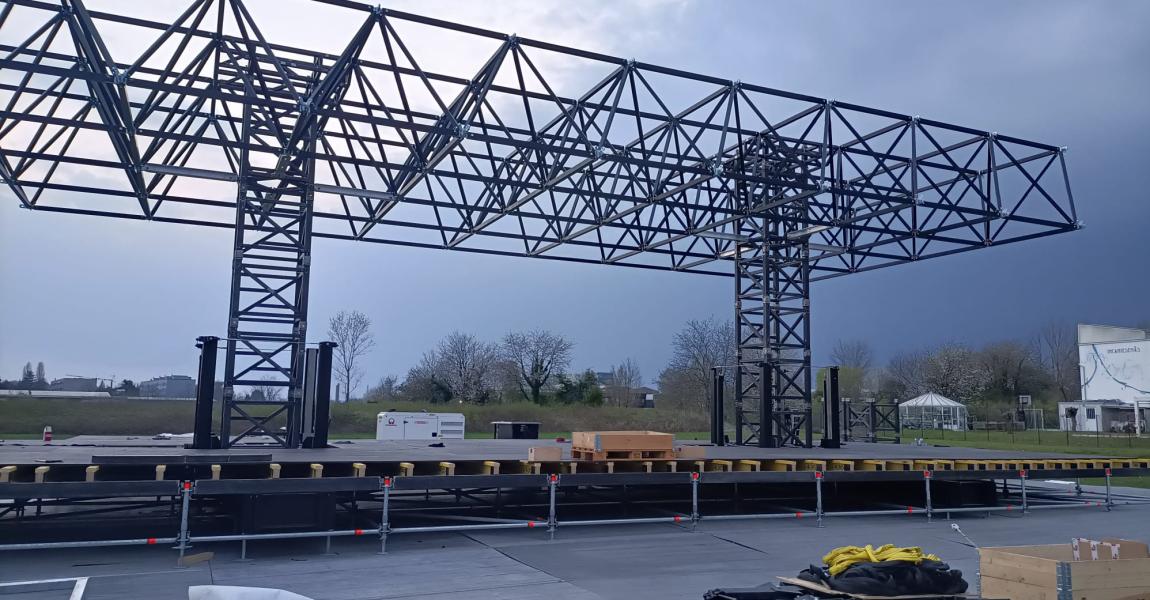
Every stage structure is a complex system made of heavy loads, precise sequences, and movements that must be perfectly coordinated and safe.
EPS Italia, an international reference in event infrastructure – supporting over 5,000 events every year – has developed a synchronized lifting system for the assembly and dismantling of truss structures for stage roofing.
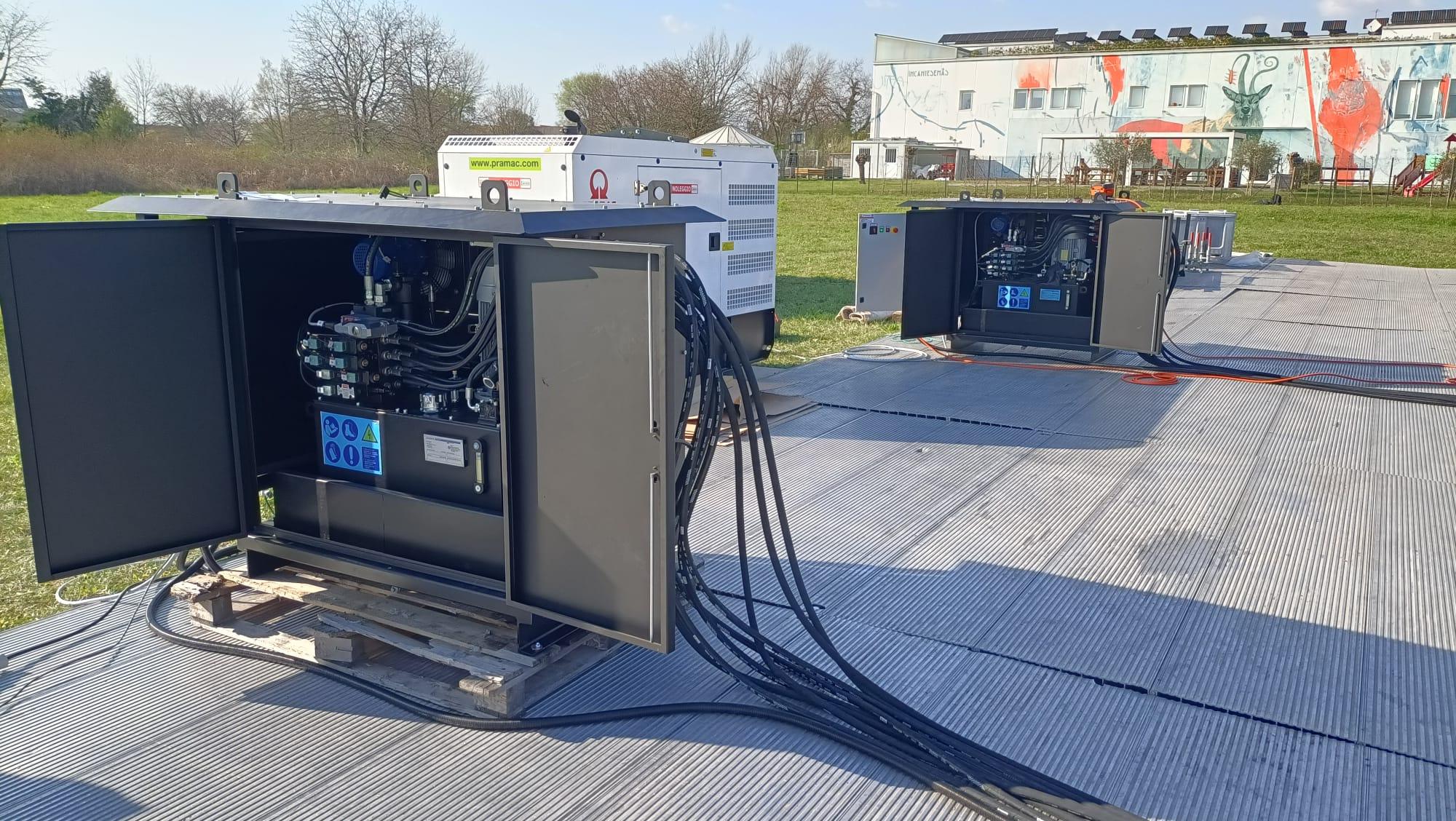
For this project, followed from concept to commissioning, Hydroven contributed to the machine setup and supplied hydraulic power units, lifting cylinders, electrical systems, and all on-board equipment.
This also included coordination of mechanical, electrical and hydraulic installation activities, as well as the management of subcontractors.
A complete approach that reflects Hydroven’s role as a system integrator, able to follow the project throughout its entire development.
A system designed to work together.
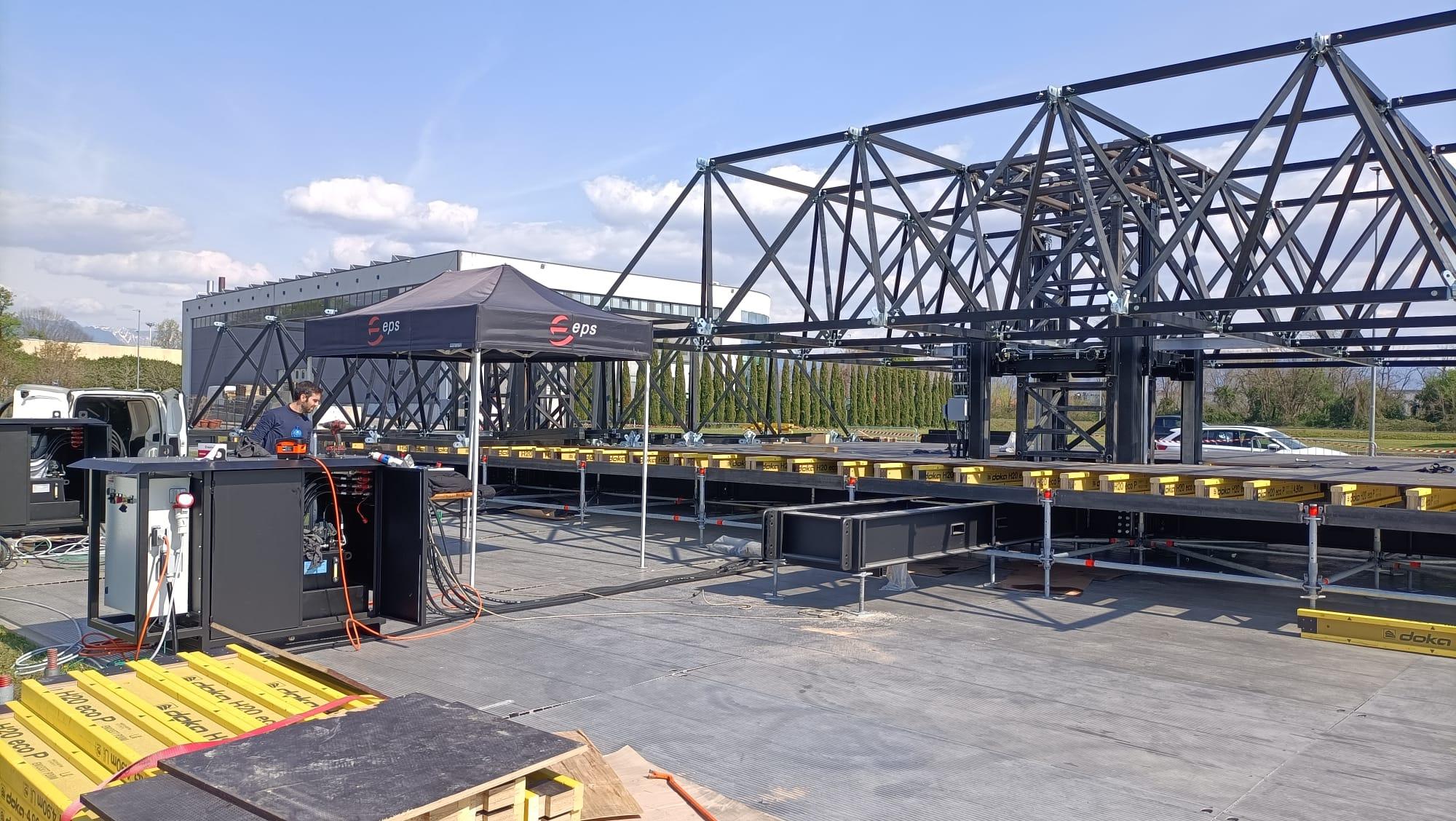
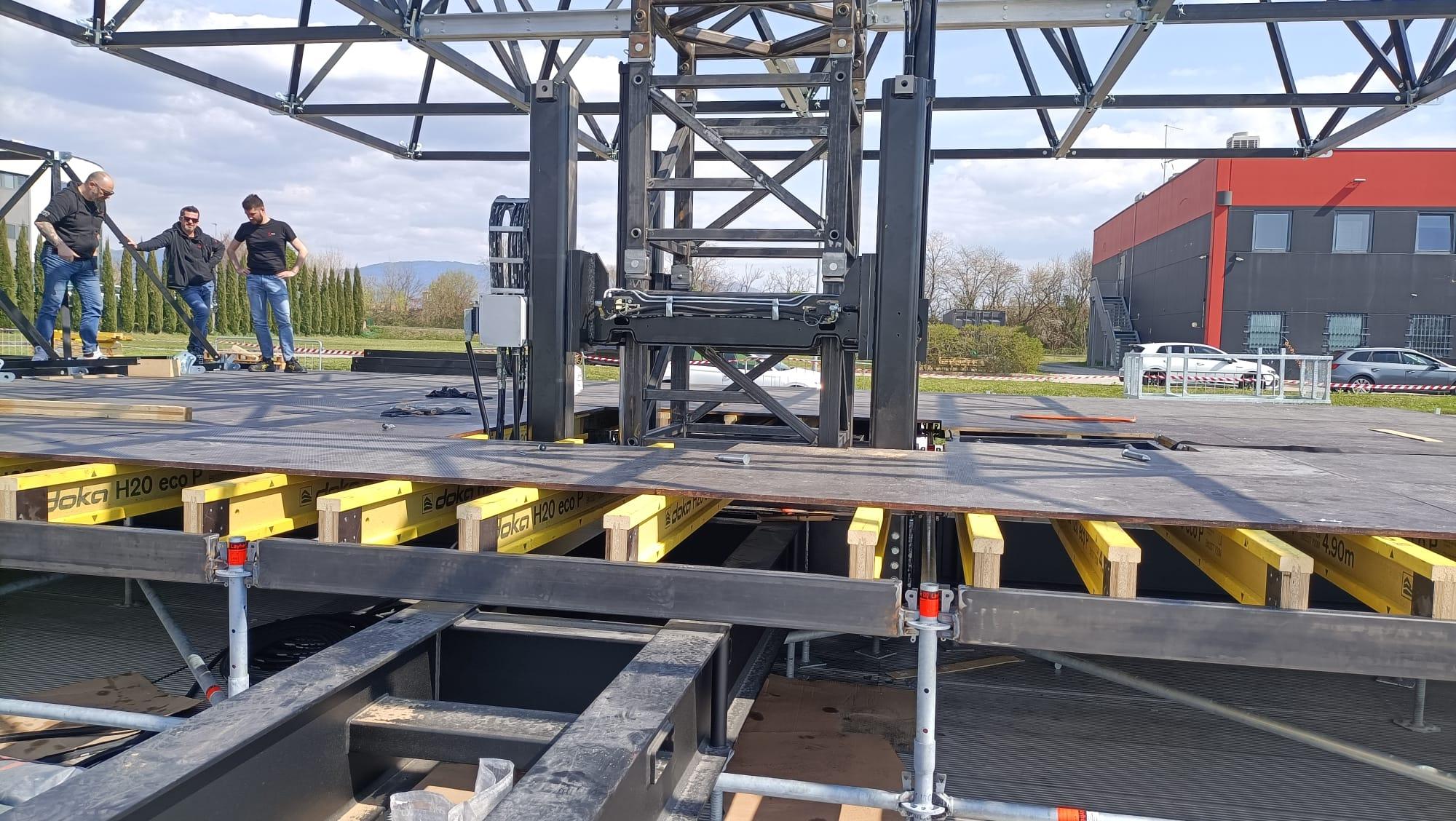
The system consists of 10 lifting units, designed to operate either independently or in perfect synchronization.
Each unit is configured with a dedicated lifting structure, complete with cylinders and hydraulic power unit.
Performance specifications:
- 9 kW installed power per unit
- 15 ton capacity per lifting unit
- 20 mm/s lifting speed
- 130-liter tank
When operating together, the units can handle approximately 120 tons, maintaining a deviation of less than 10 mm between positions.
A result that highlights the level of precision required in this type of application.
The customer needs a system that responds predictably, step by step. Ease of use comes from complex work done upstream.
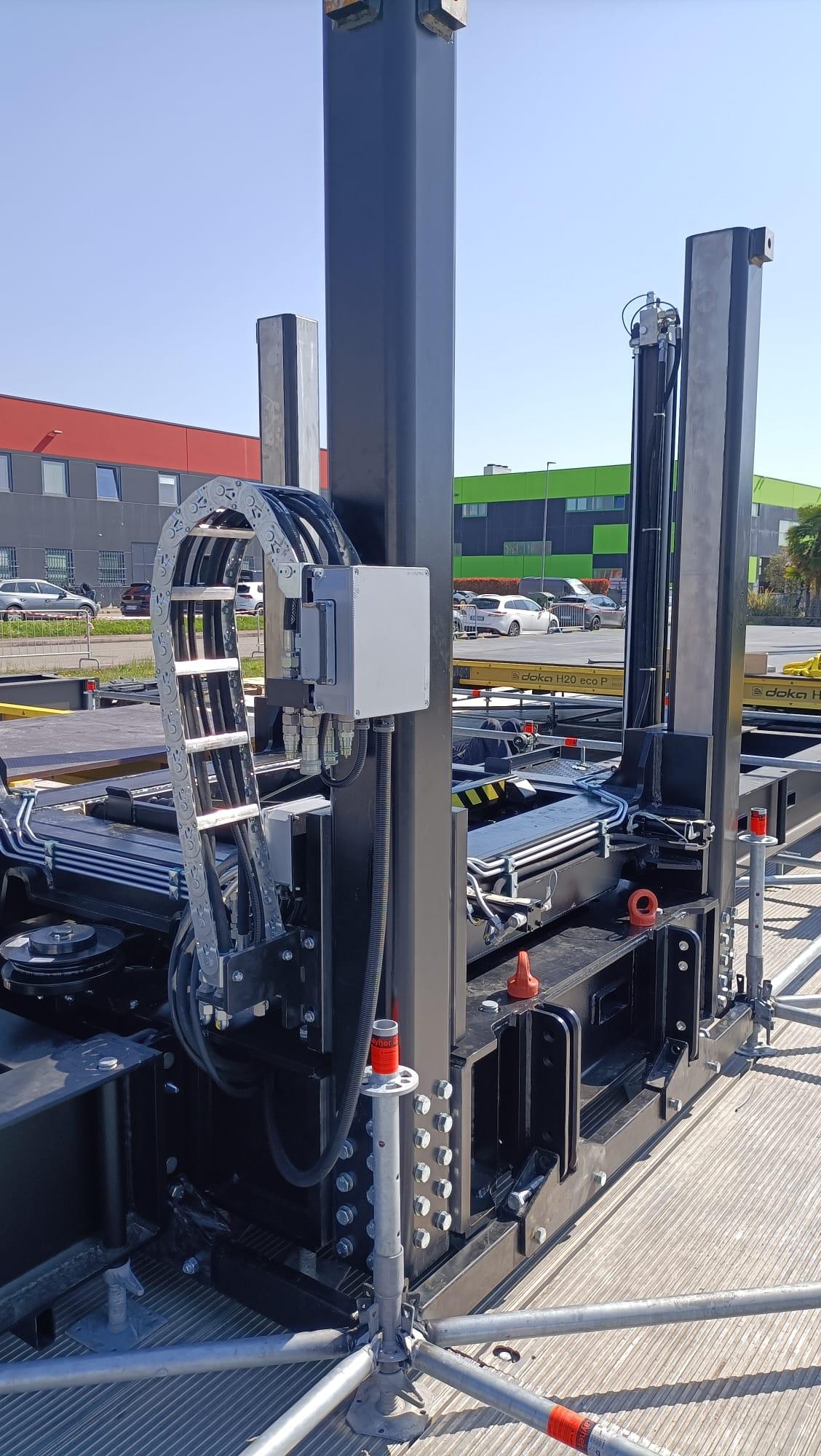
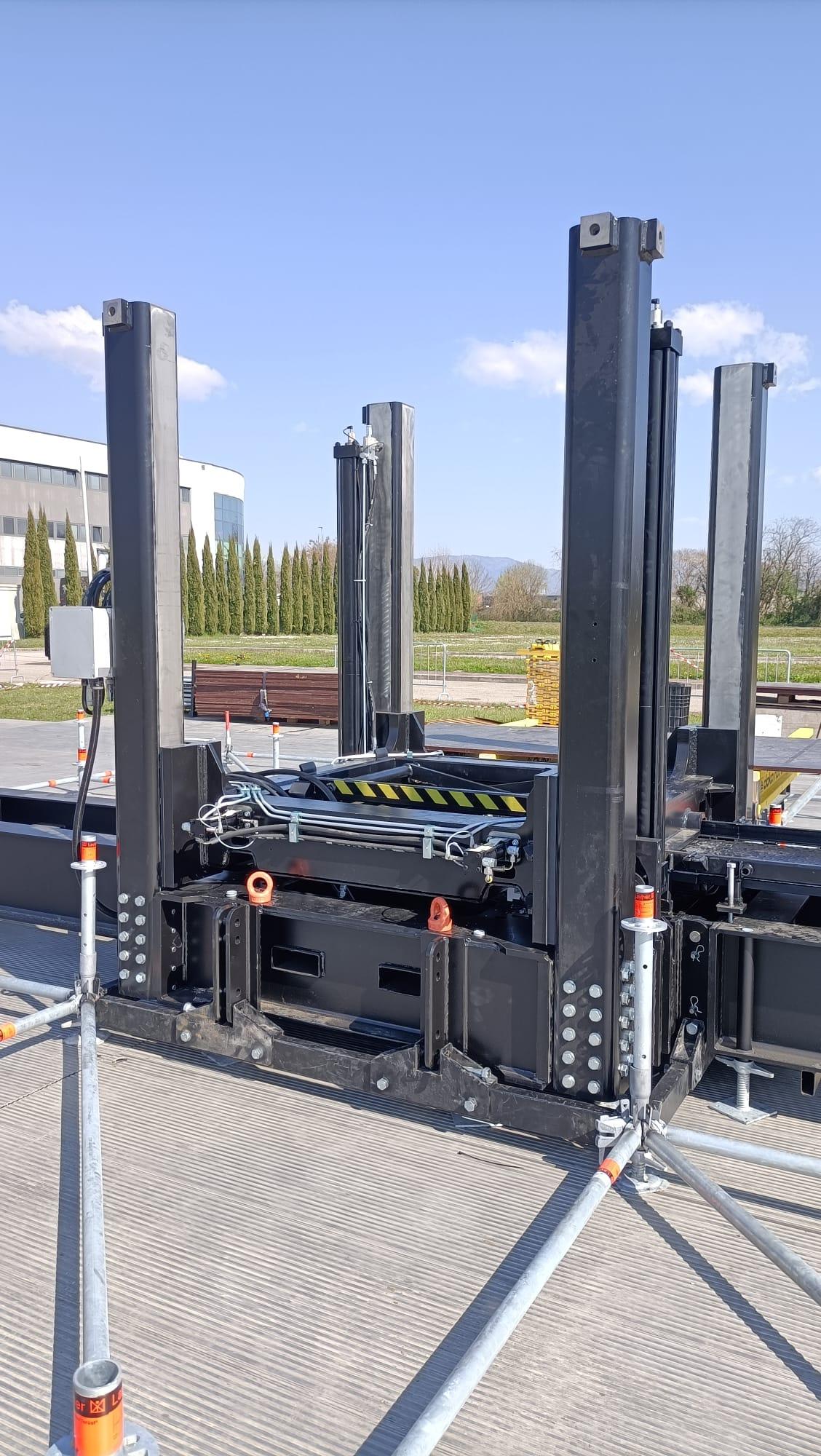
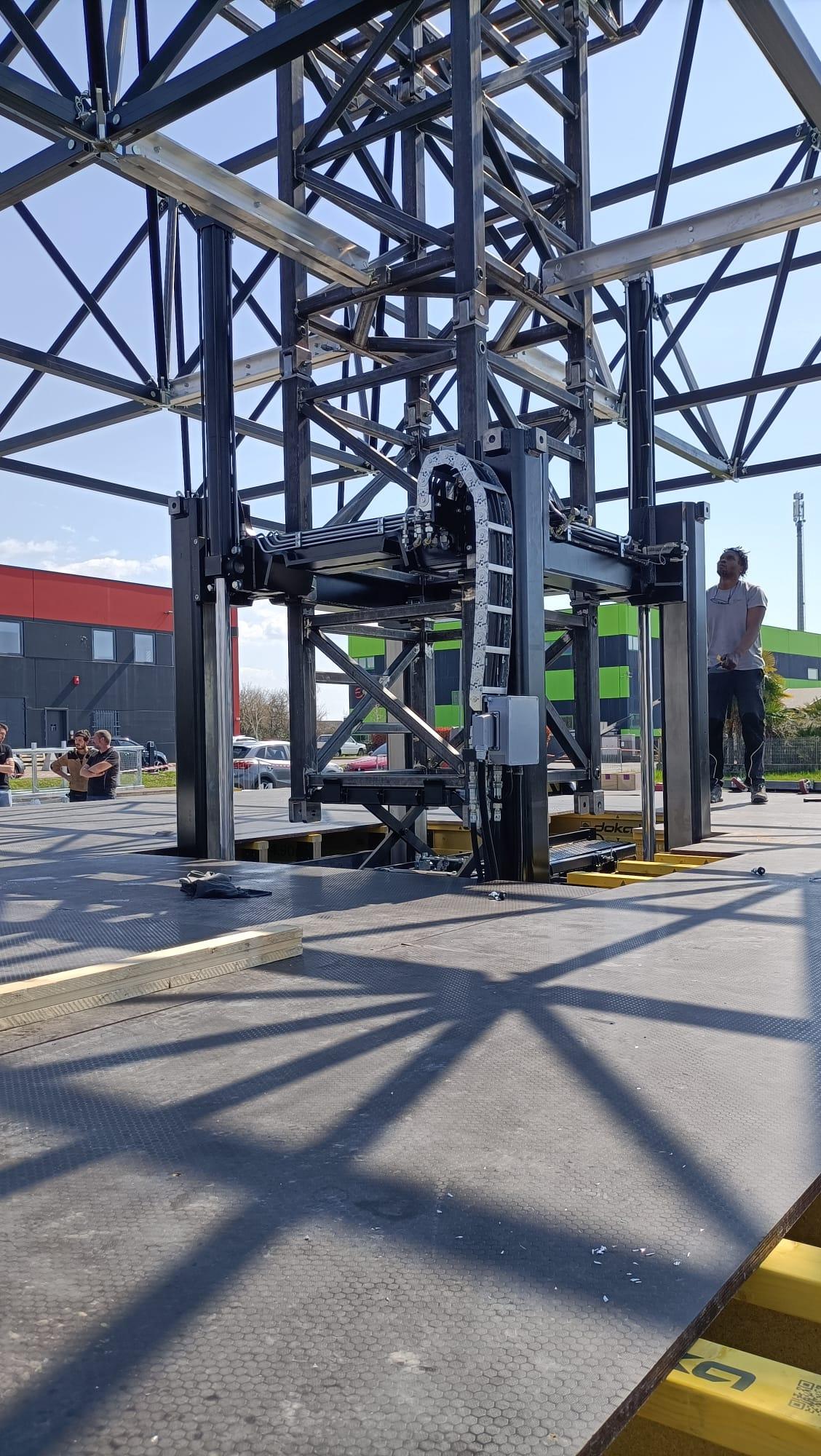
Simple control, even in complex operations.
The system has been designed to be flexible in use. Units can be controlled individually via wired control panel or managed in synchronization through a central unit.
This allows adaptation to different assembly phases while maintaining full control over movement.
A concrete transition from design to real-world use, in a context where precision, reliability and coordination make the difference.
It is precisely in projects like this that the value of the Hydroven method emerges: a path that starts from requirement analysis (Survey), continues with design (Design), validation and testing (Testing), and is completed with on-site commissioning (Commissioning).
Four phases, one objective: turning a complex requirement into a system that works.